
The tradition of Valentine’s chocolates is older than you think
When we think of Valentine’s Day today, it can feel a little overdone. Pink packaging, heart shapes everywhere, and chocolate stacked high in supermarkets.
But the connection between chocolate and love is far older, and far more meaningful, than modern marketing suggests.
Long before mass-produced bars or glossy gift boxes, cacao was already deeply tied to ritual, care, and connection. It was something precious, something shared slowly, and something made with intention. In many ways, those early traditions are much closer to modern craft chocolate than they are to what we see on the shelves today.
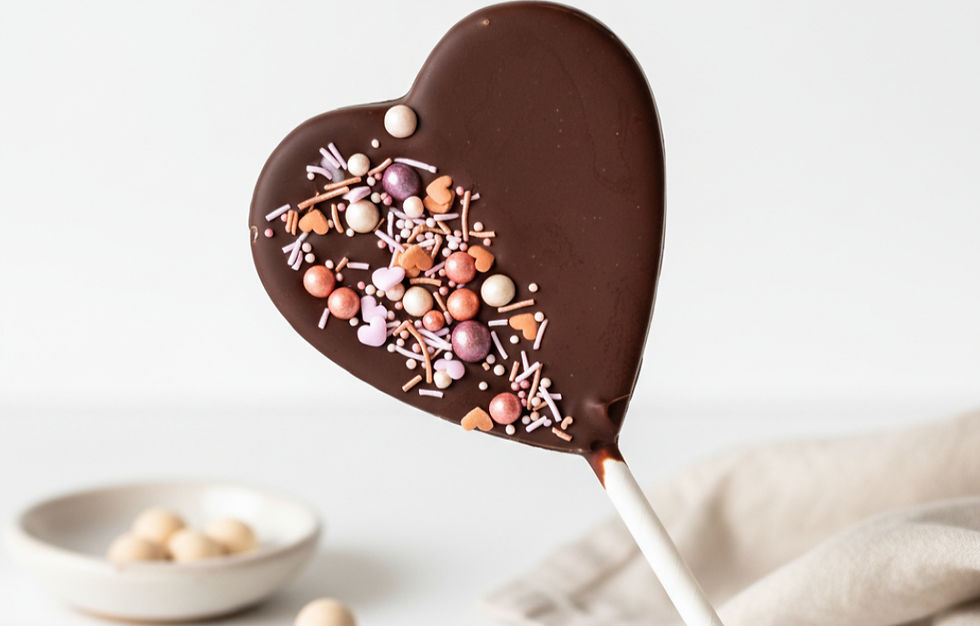
Chocolate and ritual began long before Valentine’s Day
Cacao was first cultivated in Mesoamerica, where it held deep cultural and spiritual importance. For the Maya and Aztecs, cacao was not a sweet treat but a sacred ingredient. The beans were valuable enough to be used as currency, offered to the gods, and shared during important ceremonies.
When cacao was prepared for drinking, it was ground by hand and mixed with water, spices, vanilla, and chilli to create a bitter, energising drink known as xocoatl. It was plant-based by nature, made from whole ingredients, and consumed mindfully rather than casually.
Cacao was also present in marriage ceremonies, where couples would share a drink as part of their union. The cacao crop itself was so valuable that it sometimes formed part of a bride’s dowry. From the very beginning, cacao was associated with commitment, care, and shared moments.
Stories soon followed. Cacao was believed to give energy, vitality, and even stir desire. When Spanish conquistadors arrived in the 1500s, they carried cacao and its legends back to Europe. Chocolate arrived not just as an ingredient, but as an idea.
Romance existed before sweets did
Valentine’s Day itself has ancient roots. February 14th had been associated with St Valentine since the fifth century, but it was not until the Middle Ages that the date became linked with romance.
This was the era of courtly love, when poetry and letters were used to express devotion. Sugar existed in Europe by this point, but it was rare and expensive. Chocolate had not yet arrived, so love was expressed through words rather than gifts.
One of the earliest written links between Valentine’s Day and romance appears in Geoffrey Chaucer’s 14th-century poem The Parliament of Fowls, which describes birds choosing their mates on St Valentine’s Day. The idea that this date marked a natural moment of pairing captured imaginations and quietly laid the foundations for the Valentine’s traditions we know today.
Chocolate becomes a luxury of care and indulgence
Chocolate reached Europe in the 1600s and remained a luxury for centuries. It was still consumed as a drink, often sweetened to suit European tastes, and enjoyed almost exclusively by the wealthy.
At the French court of Versailles, chocolate became part of daily life for the elite. It was favoured by King Louis XIV and later by Marie Antoinette, who famously brought her own chocolate maker with her when she married into the royal family.
Chocolate was slow to make, expensive to source, and consumed intentionally. It was not an everyday indulgence but something special, which made it a natural companion to romance. Notorious lovers of the time, including Casanova, described chocolate as an elixir of love, praising its richness and energy.
While science tells us today that chocolate is not a miracle aphrodisiac, its sensory pleasure and emotional associations were already firmly in place.
The Victorians transform chocolate into a Valentine’s gift
Chocolate only became widely accessible in the 19th century, when industrialisation made sugar and cacao more available. In 1847, the first solid chocolate bar was created in Bristol by Joseph Fry, allowing chocolate to be eaten rather than drunk.
At the same time, the Victorian era saw a renewed fascination with romance, sentiment, and devotion. Love letters, poetry, and symbolic gifts flourished. Chocolate fitted perfectly into this cultural moment.
In 1861, Richard Cadbury introduced decorated, heart-shaped chocolate boxes, designed to be kept long after the chocolate was gone. These boxes transformed chocolate into a romantic gesture, something chosen with care rather than simply consumed.
This moment cemented chocolate’s place in Valentine’s Day traditions.

From mass production to mindful making
By the early 20th century, chocolate became a global symbol of romance. Innovations like Hershey’s Kisses made chocolate affordable and widely available, further strengthening the link between chocolate and love.
Today, Valentine’s Day chocolate is often mass-produced, designed for speed and scale rather than flavour, ethics, or care. But alongside that, there has been a quiet return to something older.
Craft chocolate, ethical sourcing, and plant-based recipes echo cacao’s earliest history. Slow making. Whole ingredients. Respect for the people who grow the cacao and the hands that turn it into chocolate.
A modern take on a very old tradition
If you’d like to honour this long tradition of chocolate as something thoughtful, slow, and meaningful, I’ve created a small batch Valentine’s bonbon collection inspired by exactly that.
Each heart-shaped chocolate is handmade by me, filled with soft, gooey caramel made from oat cream and maple syrup, and finished with naturally coloured cocoa butter. They’re completely vegan, ethically sourced, and made to be savoured rather than rushed.
You can explore this year’s Valentine’s chocolates here:[Shop Valentine’s Bonbons]
Whether they’re for someone you love or a quiet moment for yourself, they’re an invitation to pause and enjoy chocolate the way it was always meant to be.

Why chocolate still belongs at the heart of Valentine’s Day
Chocolate has always been about more than sweetness. It has been about ritual, indulgence, and connection. It invites us to slow down, to savour, and to give something thoughtful.
When chocolate is made carefully, with ethically sourced cacao and simple plant-based ingredients, it feels closer to its origins. It becomes something meaningful again.
Perhaps that is why, centuries later, chocolate still feels like the perfect Valentine’s gift. Not because it is expected, but because at its best, it is made with care and meant to be shared.
Comments